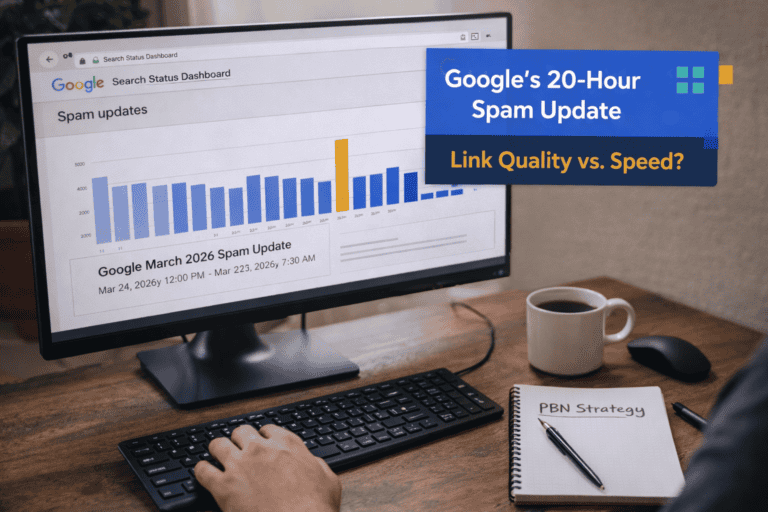
Google just rolled out its fastest spam update yet, finishing in under 20 hours. That’s a sharp break from the multi-week updates we’ve seen before. It points to a shift in how Google handles link spam, faster, tighter, and far less forgiving.
Our review of the March 2026 update, along with recent industry data, shows one thing clearly: low-quality links lose value almost immediately now. That shift also changes how people define the best PBN provider, since speed and quality control now matter more than ever.
THREE SURPRISING FINDINGS:
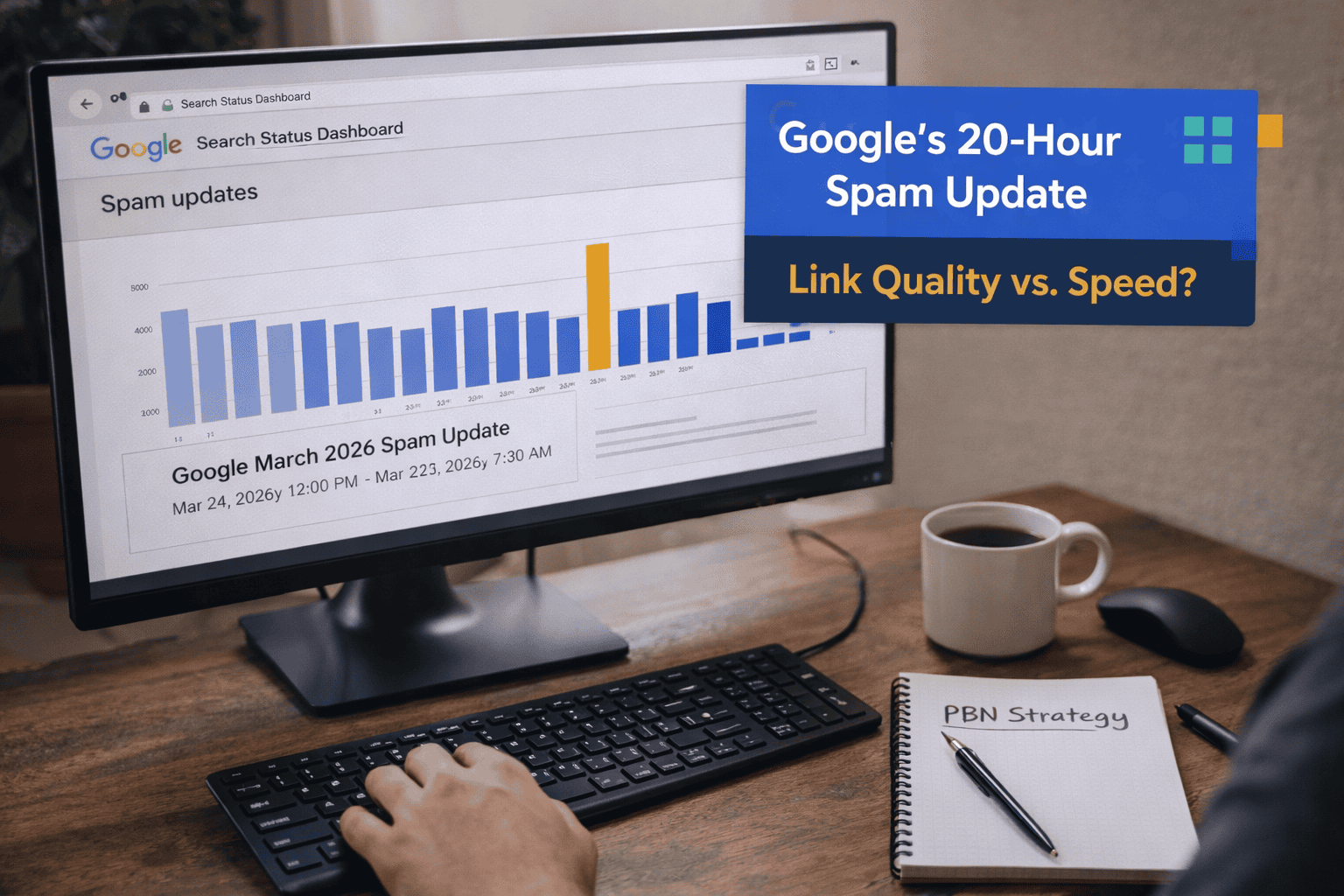
- The Speed of Enforcement is Unprecedented: Google’s March 2026 spam update wrapped up in under 20 hours. The December 2024 update took 7 days, and August 2025 stretched close to 27 days. This pace suggests an automated system that can spot and devalue bad link patterns almost in real time.
- Backlinks Still Drive Digital PR: Even with stricter spam control, 85.8% of digital PR professionals say backlinks are their most effective tactic. Another 85.1% track success mainly by the number of quality links earned. The goal hasn’t changed, only the bar for what counts as “quality.”
- Confidence in Digital PR Is Rising: 68.2% of practitioners say digital PR works better now than it did a year ago. Tighter rules haven’t slowed them down. They’ve pushed the focus toward relevance and stronger placements.
KEY FINDINGS:
- The Fastest Spam Update on Record: The March 2026 spam update ran from 12:00 PM PT on March 24 to 7:30 AM PT on March 25, finishing in under 20 hours. By comparison, the December 2024 update took 7 days, and August 2025 ran for 27 days. Source: Google Search Status Dashboard via Search Engine Journal
- Relevance Leads All Metrics: 87.2% of digital PR professionals rank site relevance as the top factor in link quality. Source: Reboot Online / Motive PR
- Search Still Drives Traffic: SEO accounts for about 53% of total website traffic, keeping organic search at the center of most strategies. Source: SEOLHR “Digital Marketing Statistics 2026”
- Digital PR Keeps Growing: 68.2% say digital PR is more effective than last year, and 85.8% say building backlinks is the best use of their time. Sources: Motive PR & BuzzStream
- A Large, Competitive Market: The global digital marketing market is projected to reach about 786+ billion dollars in 2026. Competition is high, and strong links still give an edge. Source: SEOLHR
WHAT THIS MEANS FOR BUSINESS OWNERS AND AGENCIES:
The idea that “any link helps” is gone. Google can now detect and discount weak link patterns, shared hosting networks, off-topic placements, and aggressive anchor text, often within a single day.
Backlinks still matter, but the focus has shifted. Relevance now leads the conversation. A single link from a site that actually fits your topic carries far more weight than dozens from unrelated or thin sites.
That shift changes how you choose partners and strategies. Price matters less than placement quality, editorial control, and how natural the link looks within the content.
“Google’s March 2026 spam update isn’t about killing PBNs. It targets low-quality link schemes,” said Samuel Huang, Founder and CEO of ArchSEO. “The 20-hour rollout shows how quickly patterns are flagged. Links need to make sense, match the topic, and sit on sites people would trust even without SEO.”
This analysis draws on data from Google’s Search Status Dashboard and industry surveys from BuzzStream, Motive PR, and Reboot Online, based on responses from digital PR and SEO professionals in early 2026.
This faster cycle leaves less room for shortcuts. Link building now depends on relevance, placement, and intent.
Read the complete analysis with full methodology on our blog → Google’s March 2026 Spam Update: Choose the Best PBN Provider
For more on how we build relevance-focused link strategies, visit our SEO Link Building Services page.